
Wiesemann & Theis GmbH

Networking, sensors and interface technology for industry, office and IT

House

Application for the Web-IO Digital:

Collect process data
using the Web-IO Digital

Solid pre-planning of material requirements and workload increasingly require that process and operating data be collected and evaluated in chronological context.

But what do you do when the existing machinery and plant technology itself do not provide for this?

Data acquisition via FTP

Most machines use potential-free contacts to signal operating status - the W&T Web-IO Digital products can monitor these contacts and write the switching states via FTP to a file including a time stamp.


Preparations


Configure Web-IO for FTP and create actions for writing to file

For the browser to have access, the Web-IO must already have an IP address.

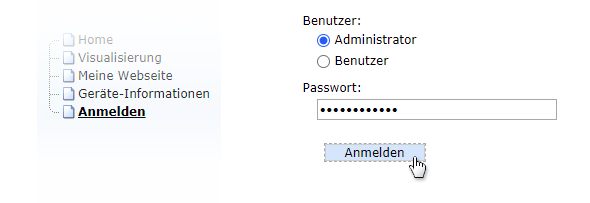
  • To change the configuration of the Web-IO you first need to obtain the necessary access rights by entering the administrator password.
    Box to Box Master
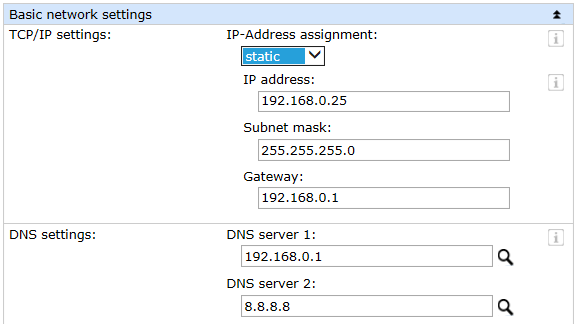
  • First check whether all the IP parameters are correctly configured. Especially when the FTP server is addressed using a host name it is important that both the gateway and the DNS server are entered. To do this, in the menu tree select Basic settings >> Network and there Basic network settings.
    Web-IO FTP Logger

  • All the configuration changes must be confirmed using the Apply button.

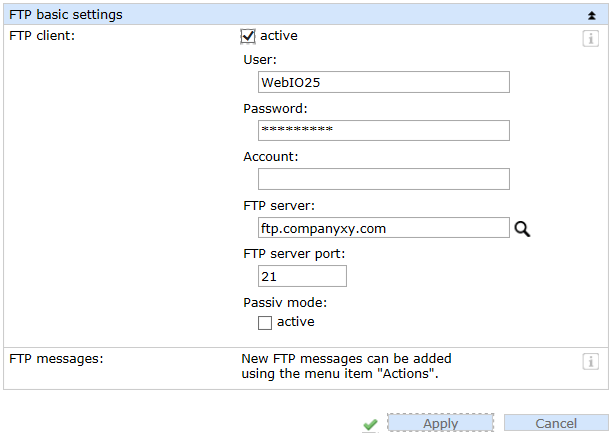
  • To configure FTP access to to the menu tree and select Communication channels >> FTP.
    Web-IO FTP Logger

  • Enter the access data for the FTP server.

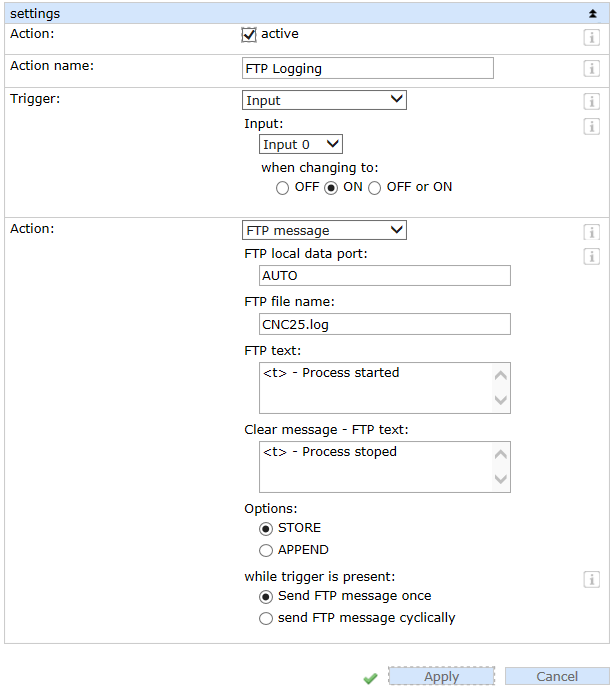
  • In the menu tree click on Actions and then on the Add button.
    Web-IO FTP Logger
  • Assign a meaningful name for your action and select the trigger for writing using FTP.

  • As the action select FTP Message and configure FTP file name and FTP text (if needed also for the Clear message). In the FTP text move the cursor to the end of the line by pressing the Enter key. Now each entry in the file will be in its own line. The <t> tag is replaced with date and time when writing to the file.

Once these steps are completed, any changes in the connected switching states are collected in one or more files chronologically.


Process data provides information about the course of production processes

It is essential for companies to know as much as possible about their production and its individual processes. This is the only way to identify the potential for optimization. The recording and evaluation of process data shows where production processes can be further improved, but also where costs can be reduced. Process data means all information that is relevant for a production process. There is a clear differentiation between quantitative and qualitative data.

What are quantitative process data?

Quantitative process data is information that can be clearly expressed in numbers. The machine temperature would be an example here. However, the energy consumption of the individual machines and the vibration data also play a role. This information usually represents measured values that are determined either by the machine control system or sensors. Qualitative process data however refers to data that cannot be represented in numbers. Shift information, for example, plays an important role here.

Automatic collection of process data saves time and money

For a long time, process data was only collected manually. There are now systems for automatically recording the relevant data. Such process data acquisition systems not only save you time, but can also significantly reduce the associated costs. Special miniature IT systems such as the W&T Web-IO 4.0 Digital Logger can be used for automatic recording and evaluation. Access to control systems is also possible. The technologies and sensors that are now available allow automatic process data to be collected decentralized for subsequent centralized processing. This lets you improve work processes in a targeted manner. If you have any questions regarding collection of process data and the associated possibilities, we will be happy answer them.


Frank Thiel

Do you have more Web-IO questions?

Mr. Thiel will be glad to help.

Phone: +49 202/2680-110 (Mon.-Fri. 8 a.m. to 5 p.m.)

E-mail: f.thiel@wut.de

Don’t have a Web-IO yet and just want to try it out?

No problem: We will be glad to send you a unit at no charge for 30 days. Simply fill out the sample order form and we will ship the Web-IO on open invoice for testing. If you return the device within 30 days, we will cancel the invoice.

Order a sample now!

Are you still uncertain which Web-IO is best for your needs?

Not sure whether the Web-IO is right for your application? No problem, our qualified team of technicians will be happy to help you. If you have any questions about commissioning, installation or use, we are also there for you personally on weekdays from 8 am to 5 pm!

Phone: +49 202/2680-110 (Mo-Fr. 8 a.m. to 5 p.m.) or email info@wut.de


Additional information


^